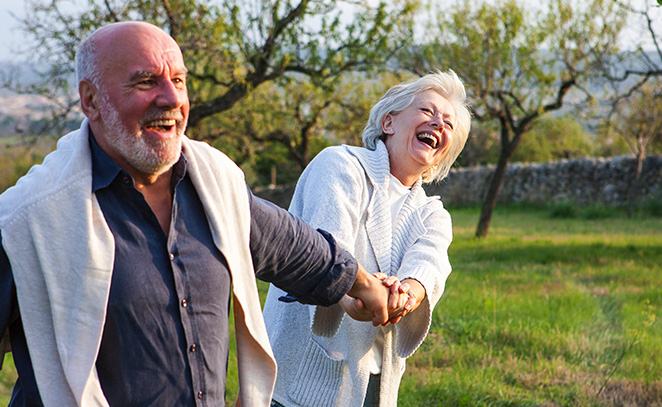
But loneliness in later life is not inevitable. With awareness, support, and opportunities to connect, it is possible to build friendships, rediscover purpose, and enjoy a fulfilling retirement.
To explore how, we spoke with Alison Bough, Health Psychologist and Policy & Programmes Manager at Active Retirement Ireland (ARI), and Mai Quaid, ARI’s National President. Their combined insights highlight both the serious impact of loneliness and the very real ways it can be overcome.
Understanding Loneliness
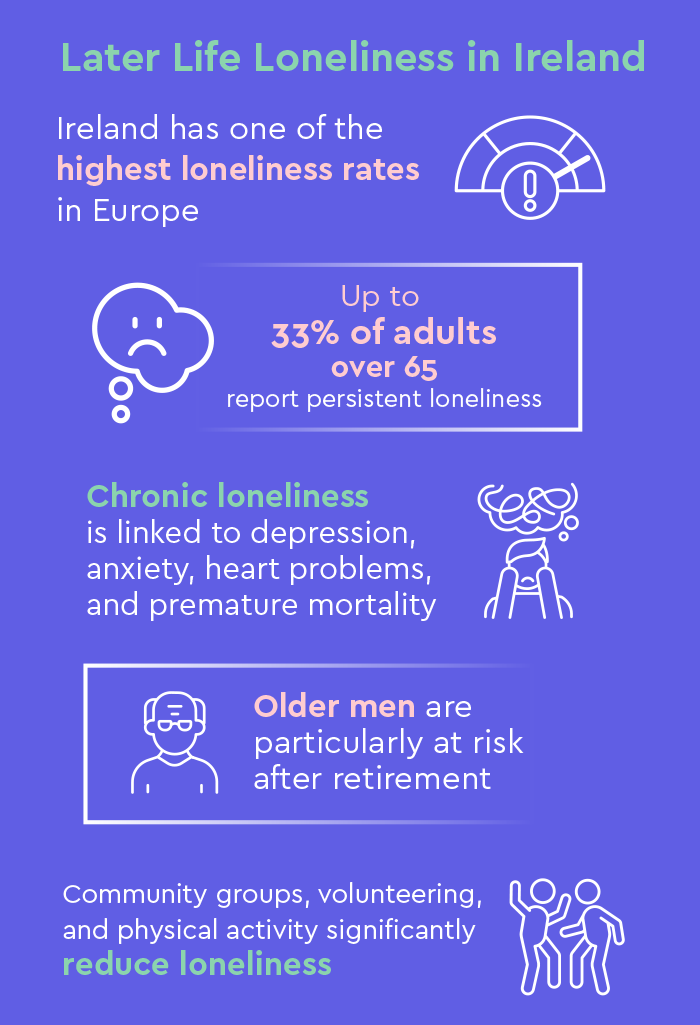
“Loneliness is surprisingly common and has profound consequences,” explains Alison. “Chronic loneliness increases the risk of depression, anxiety, and cognitive decline, as well as physical problems like heart disease and weakened immunity. In Ireland, around 25–30% of adults over 65 experience persistent loneliness, which makes this a pressing public health issue.”
Mai agrees that retirement is often a turning point. “For many older people, leaving work or changes in routine mean losing regular social contact. Joining an Active Retirement Association gives people the chance to connect, share experiences, and participate in activities with others in similar situations. That sense of community can make all the difference in combatting isolation.”
Alison also points out that loneliness is different from simply being alone. “Many older adults value time to themselves, but loneliness arises when meaningful social contact is missing. The focus should be on genuine connection, not just filling time.”
Spotting the Signs
Recognising loneliness in yourself or others isn’t always straightforward. According to Alison, warning signs include withdrawing from activities, changes in mood, disrupted sleep, or reduced communication.
Mai adds: “Sometimes it’s something as simple as missing a regular group meeting. A friendly call or invitation to join an event can help someone reconnect and feel included again.”
Why Men Are Most at Risk
Research consistently shows that older men are particularly vulnerable to loneliness. “Men’s social lives are often built around work,” says Alison. “When that ends, the daily interaction and sense of purpose can suddenly vanish, increasing risks of depression, alcohol use, and even premature death.”
Mai has seen this first-hand: “Many men lose much of their social life after retirement because work was their main source of friendship. By joining an Active Retirement Association or volunteering, they can rebuild those networks and regain a sense of purpose.”
Staying Connected and Active
The best antidote to loneliness is staying socially engaged and active.
- Friendships and hobbies provide both joy and connection.
- Technology such as video calls or messaging can help bridge distance, provided older adults are supported in using it.
- Group activities – such as walking, dancing, yoga, or games – offer both stimulation and companionship.
“For many mature people, continuing to take part in activities like golf, pickleball, dancing, or indoor bowling is hugely popular,” says Mai. “Others enjoy quieter pastimes like bridge, poker, or table quizzes. What matters most is being with friends, sharing experiences, and feeling part of something.”
A Lifeline of Connection
With more than 550 Active Retirement Associations across the country, ARI plays a vital role in tackling loneliness and informing public health policy.
“Our ARAs are vital,” says Alison. “They prevent loneliness, promote wellbeing, and ensure older people’s voices inform government decisions. The impact goes beyond individual members – our network strengthens communities and supports healthy ageing nationally.”
Mai adds: “Being part of an ARA means you never have to face isolation alone. There’s always a group, an outing, or a friendly face ready to welcome you.”
Take the First Step
Loneliness in later life may be common, but it is not inevitable. Staying socially connected, active, and engaged is key to ageing well. Whether through hobbies, volunteering, or community groups, there are many ways to build lasting friendships and protect your wellbeing.
If you’re looking for ways to get involved, consider joining your local Active Retirement Association. Visit www.activeirl.ie to find a group near you. It could be the first step toward new friendships and better health in later life.