The ugly overhead light…
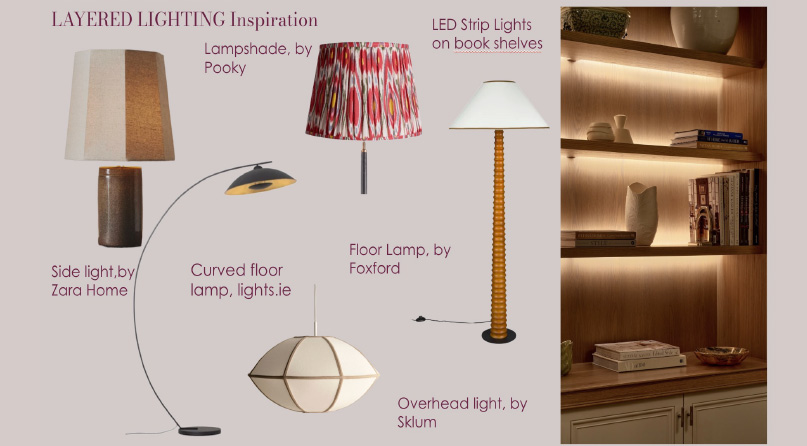
An overhead fitting is designed for visibility, not atmosphere. Left as the only light source, it flattens a room and casts everything in the same flat glare. The trick is to soften and share the load. Swap a harsh white bulb for a warm white one, which can be easily found in supermarkets and hardware stores. If your fitting allows it, an inexpensive dimmer switch can make a huge difference. This one simple fitting can change the atmosphere depending on whether you want a bright morning or a relaxed evening vibe. Also consider the shade itself, a warm textured fabric or natural hessian shade close to the ceiling can diminish the glare of the overhead light. Zara Home is particularly good on overhead fittings.
Light at the right height…
The real secret to cosiness is getting light sources lower, closer to where people actually sit and read. This is where side lights earn their keep. A pair of table lamps either side of a sofa, on a sideboard, or flanking a bed does more for atmosphere than any ceiling fitting. Charity shops and online marketplaces are goldmines for lamp bases at affordable prices. A fresh shade from Dunnes Home or Woodies and a warm bulb can make a tired lamp look brand new.
Don’t ignore the corners
Every room has a dim corner that the overhead light never quite reaches. This can make the room feel smaller as well as dull. A standard floor lamp is the solution in either an arc or stem design. These can be sourced on a budget from high-street shops like Next and Marks & Spencers. Position your lamp near a reading chair or behind a sofa to add height and depth to the light in the room, rather than everything coming from the same level.
LED strips offer magic results for minimum investment
Lighting strips have become the unsung hero of cosy yet modern interior design. A basic warm-white LED strip tucked along the top of a bookcase, or under a kitchen or bathroom cabinet, adds a soft glow that makes a room feel finished without any visible bulbs or fittings. These work particularly well in terms of creating an atmosphere at night especially if you don’t want to wake everyone up by using the overhead lights. The right tone is essential here. It’s all about the warm glow rather than the cooler, bluish light, which will have the opposite effect to what you’re trying to achieve.
Light it up before you leave…
When buying new lampshades, whether for overheads or side lamps, it’s important that you see how they look when lit. Shades can often look one colour during the day and another at night. Your lampshades should complement your room at both times of the day. Ideally they should appear warmer in the evenings rather than casting a cold or barely there tone. Therefore, always ask to see the shade lit up in the shop before you make a final decision. This is going to save you a lot of time and frustration in terms of finding the right colour shade and ambience for your home.
The real rule: layer, don’t blast
The single most useful habit to take from all this is layering. Combine two or three lower, warmer sources of light rather than relying on one bright one. A side lamp, a floor lamp, and an LED strip together, all switched on at once, will make a room feel warmer and more inviting than the brightest overhead bulb ever could. Cosiness, it turns out, isn’t about spending more. It’s about spreading the light around.